Our main service

Composite decks built for Seattle's long wet season

Composite decking is the core of what we do. Here's what goes into one: the boards, the layout, the railing and stairs, the lighting, and the frame underneath that most people never see.

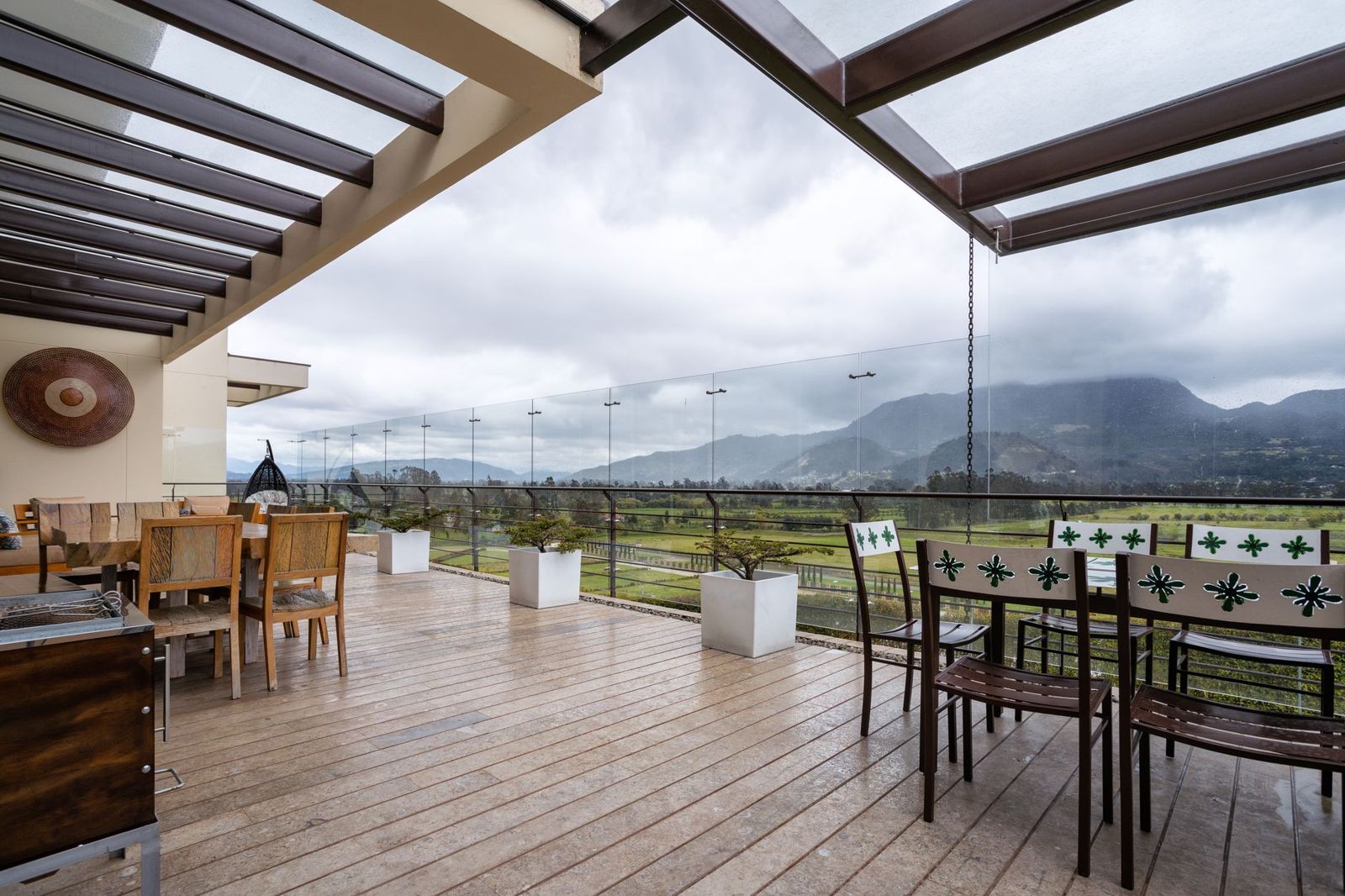
Wide covered deck with long plank decking, glass panel railing and dining furniture overlooking green hills under clouds
Style idea: long-plank decking under a partial roof with a frameless glass rail.
Board types

Two families of boards, explained without the sales pitch

Nearly every modern low-maintenance deck uses one of these. We bring samples of both to the estimate so you can feel the difference in your hands.

Most common choice

Capped composite

A core of wood fiber and plastic wrapped in a tougher polymer shell. The shell is what handles rain, stains and fading; the core gives the board a solid, wood-like weight underfoot.

  • Wide range of colors and grain patterns
  • Feels substantial when you walk on it
  • Good fit for most Seattle backyards
For the wettest spots

PVC (cellular) decking

Contains no wood fiber at all, just plastic, so there's nothing organic in the board to absorb water. It's lighter than capped composite and is usually one of the pricier options.

  • Well suited to shaded, damp or low-to-grade decks
  • Lighter boards, often a cooler surface in sun
  • Tends to cost more than capped composite

Brand and line matter more than the category. Color options, heat behavior and manufacturer coverage vary from brand to brand, so we'll compare the specific product lines side by side with you rather than generalize.

Layouts

Shaping the deck around how you'll use it

A good layout starts with the door you'll walk out of and the furniture you want to fit. From there we look at sun, views, privacy and where the yard slopes away.

  • Ground-level platforms for flat yards and a simple step down from the house
  • Raised and second-story decks off kitchens and living rooms on sloped lots
  • Multi-level decks that split dining and lounging zones and follow the grade
  • Picture-frame borders that hide cut board ends and give a finished edge
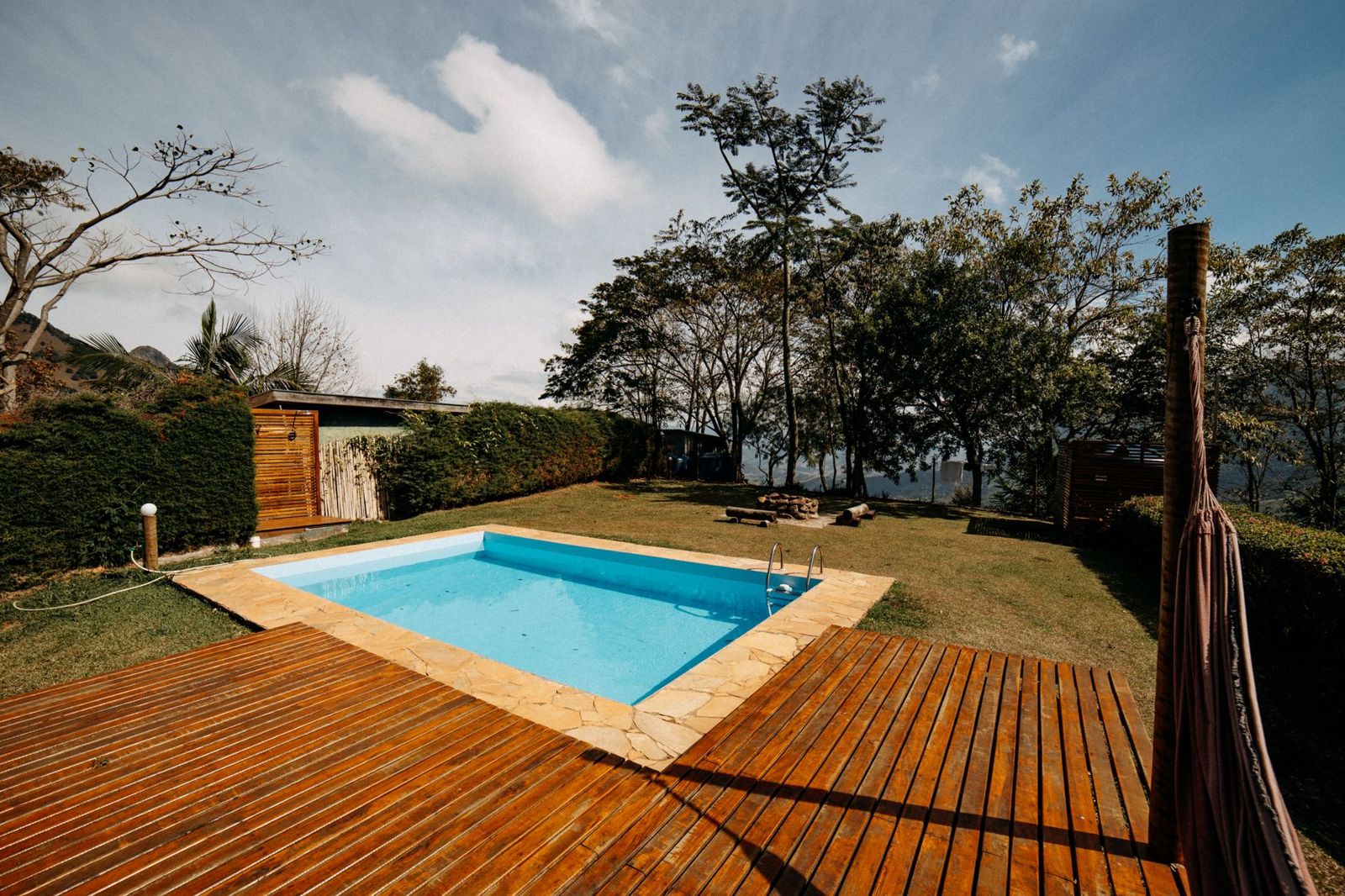
Warm-toned plank deck wrapping around the corner of a stone-edged swimming pool on a grassy lot
Style idea: an L-shaped deck that wraps a feature instead of sitting as a plain rectangle.
Railings, stairs & lighting

The details you touch every day

Railings

Aluminum rail is slim and needs little care. Cable keeps a view open. Composite rail matches the boards for a unified look. Glass panels suit decks where the view is the whole point.

Stairs & landings

Wide, even treads with a contrasting nosing are easier to read on a grey evening. Landings break up long runs down a hillside and give you a spot to set things down.

Lighting

Low-voltage post caps, stair riser lights and small recessed deck lights make steps visible after dark without lighting up the neighbors' windows.

Framing & drainage

What holds a composite deck up is still wood

Composite boards sit on a pressure-treated lumber frame, so the frame deserves as much attention as the surface. In a climate this wet, that means designing for water from the start.

  • Joist spacing set to the board manufacturer's instructions, which is often closer than older wood decks used
  • Flashing where the deck meets the house so water can't sit behind the ledger
  • Protective tape on the tops of joists to shed water that drips between boards
  • Room for air to move underneath, especially on low decks close to the soil
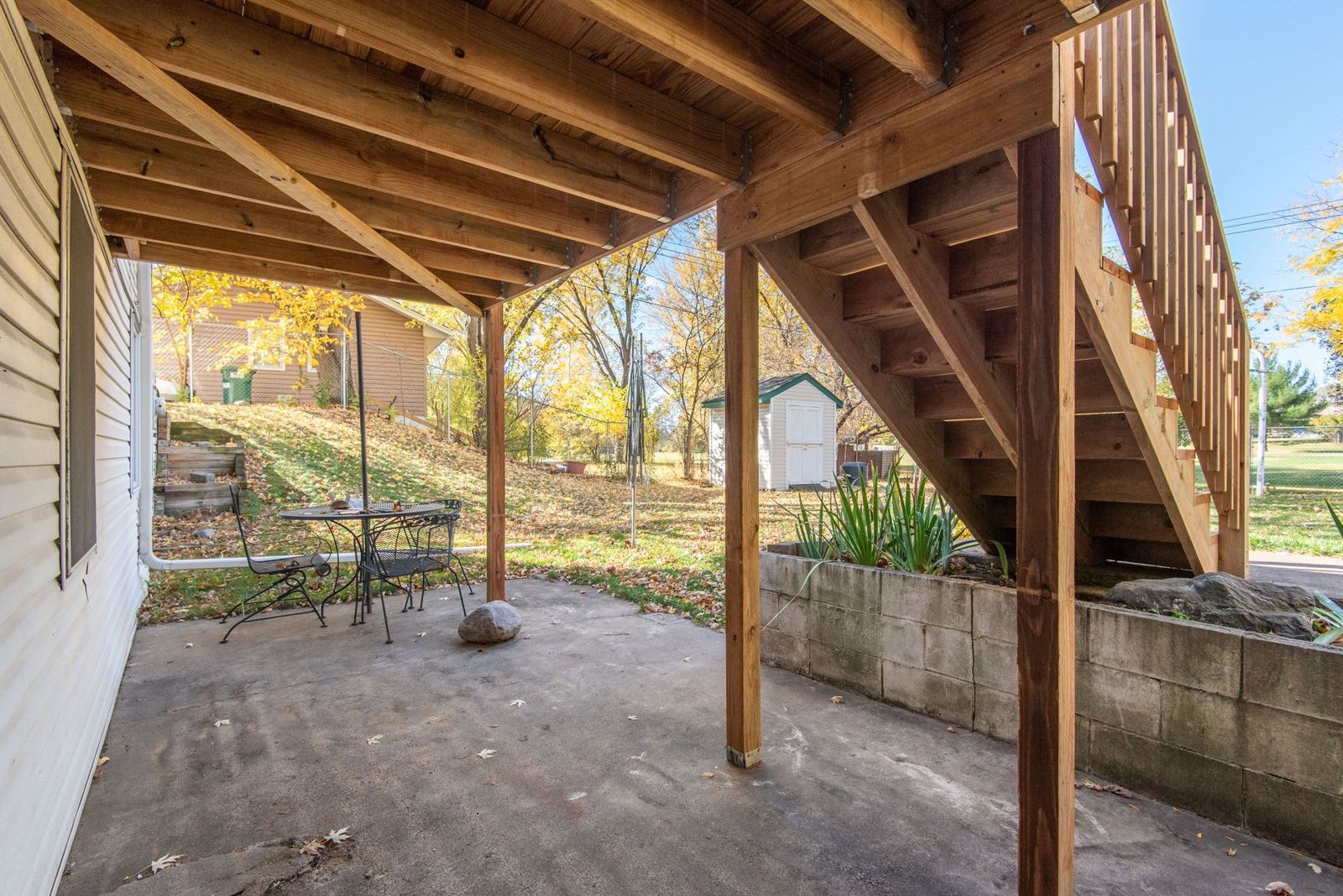
Underside of a raised wooden deck showing joists, beams, support posts and an attached staircase above a concrete patio
Joists, beams and posts: the part of any deck that does the real work.
Upkeep

Caring for composite, realistically

Composite is low-maintenance, not no-maintenance. Plan on a gentle wash in spring and again in fall, using a soft brush and mild soap or a cleaner the manufacturer approves. Sweep fir needles and leaves out of the gaps between boards so water can keep draining through.

In winter, a plastic shovel is kinder to the surface than a metal one. Rubber-backed mats and grill spills are the usual suspects when stains show up, so a grill pad is worth having. That's about it: no sanding, no sealing, no stripping.

FAQ

Composite deck questions we hear often

How does composite handle moss and wet leaves?

It won't rot the way unprotected wood can, but debris left sitting on any surface can stain or grow green film. A seasonal rinse and a soft-bristle scrub keep it looking right.

Can you match composite boards to my existing railing?

Often, yes. Many board lines come in several tones, and we can bring samples to hold against your current rail or house trim. Where a close match isn't possible, a deliberate contrast usually looks better than a near miss.

Will composite boards feel hot in summer?

Darker boards in full afternoon sun can get warm to bare feet. Lighter colors, some PVC lines and a bit of shade help. For most Seattle decks it's a consideration for a few weeks a year rather than a daily one.

Is hidden fastening worth it?

Hidden clips leave a clean surface with no screw heads, which many homeowners prefer. Some board edges, stair treads and borders still use color-matched face screws. We'll explain what your chosen line requires.

What's the typical build time for a composite deck?

That comes down to size, height, stairs, permits and weather. After the site visit we'll give you a realistic schedule for your specific deck rather than a generic number.

Start planning your composite deck

We'll measure, bring board samples and give you a written estimate.

Contact us